
BACKGROUND
In response to these urgent needs, Save the Children Somalia has initiated the "Strengthening Anticipatory Action Systems and Capacity Building to Mitigate Climate-Related and Human-Induced Shocks" project. This ambitious 11-month initiative, funded by Save the Children Italy and a consortium of international donors, aims to strengthen the resilience of Somali communities by enhancing the capacity of national and local systems to anticipate, prepare for, and respond to climate-related and human-induced shocks. The project is designed to complement ongoing efforts by other actors in the field of anticipatory action, with a focus on fostering collaboration and leveraging local expertise.
One of the key components of the project is the partnership with local entities and ICPAC to improve the delivery and accessibility of meteorological, hydrological, and climate information. This capacity building will provide opportunity for the local organizations to understand and internalize the Roadmap for Anticipatory Action that will enhance the establishment of a cohesive regional approach to anticipatory action, harmonized and integrated within member states and federal government policies and strategies, thereby promoting disaster anticipation to inform anticipatory actions aimed at fostering climate-resilient communities across. By enhancing the dissemination of this critical data, the project seeks to empower communities to make informed decisions in the face of impending disasters. This involves not only providing timely and accurate forecasts but also ensuring that the information is presented in a way that is understandable and actionable for local populations. The project recognizes that effective communication is a cornerstone of successful anticipatory action and is committed to bridging the gap between technical data and community-level application.
In Southern Somalia and Somaliland, the project is working closely with local community structures to develop and implement Early Action Plans (EAPs). These plans are designed to outline specific actions that communities can take in response to early warnings, helping to mitigate the impacts of anticipated shocks. By supporting the development of EAPs, the project aims to enhance the preparedness of local communities, enabling them to act swiftly and effectively when faced with imminent threats. This includes activities such as pre-positioning of emergency supplies, reinforcing infrastructure, and implementing community-led evacuation plans.
The overarching goal of the project is to map, assess, and build the capacity of local institutions and civil society organizations, enabling them to take a more active role in anticipatory action. SMARTIC consultants has undertaken comprehensive assessment of current capacities, including an evaluation of existing early warning systems, disaster preparedness plans, and response mechanisms for different organizations that operate in Kismayo that includes Wajir South Development Organization (WASDA), Social Life and Agricultural Development Organization (SADO), Aussie Association of Somalia (AAS) and Juba Foundation. SMARTIC experts has identified gaps and weaknesses in these systems and in this report has suggested targeted recommendations for capacity building and improvement. Through training, technical support, and resource allocation, the project aims to strengthen the ability of local and national actors to lead anticipatory action efforts, fostering a more proactive approach to disaster management in Somalia's fragile and complex environment.
In addition to capacity building, the project places a strong emphasis on empowering local communities to take ownership of their disaster preparedness efforts. By putting local and national actors at the forefront of anticipatory action, Save the Children aims to shift the focus from reactive emergency response to proactive disaster risk reduction. This approach is aligned with the broader "Shifting Power" agenda, which advocates for local ownership and leadership in managing and mitigating the impacts of climate-related and human-induced shocks. The project seeks to create a sustainable model of community resilience, where local knowledge, expertise, and resources are harnessed to build stronger, more self-reliant communities that are better equipped to face future challenges.
Overall, the "Strengthening Anticipatory Action Systems and Capacity Building to Mitigate Climate-Related and Human-Induced Shocks" project represents a critical step forward in addressing the complex and evolving challenges posed by climate change in Somalia. By enhancing early warning systems, building local capacities, and empowering communities, the project aims to create a more resilient and prepared society, capable of withstanding the shocks and stresses of a changing climate.
Project Objectives
The objective of this project is to strengthen the resilience of communities in Kismayo district to El Niño and climate induced shocks through a localized anticipatory action approach. By leveraging local knowledge, capacities, and resources, this proposed project aims to reduce the impact of El Niño on vulnerable communities and enhance their absorptive capacity.
Methodology
The final evaluation will employ a qualitative data collection approach to gather both secondary and primary data, enabling an examination of both the intended and unintended outcomes of the project. Initially, the consultant will conduct a comprehensive review of project documents and available raw data, including pre and post testing, training report, quarterly and interim reports, activity reports, and routine project data (IPTT).
The consultant will also conduct key informant interviews (KIIs) using purposive and quota sampling procedures. The respondents for these KIIs will include trained individuals, CSOs, MOHADMA (Jubaland), and SCI project staff.
Throughout the evaluation process, the consultant will collaborate closely with the Save the Children technical team, seeking their advice and following their guidance. Special attention will be given to ensuring the participation of individuals with disabilities, both adults and children. All participation will be voluntary, meaningful, safe, and inclusive.
It is crucial that the consultant fully understands the nature of the assignment and develops detailed data collection methodologies and tools that align with the project objectives and results framework.
Gender, age, and disability disaggregation will be applied during the data analysis process using the Washington Group short set questionnaire.
Using the OECD DAC criteria, the evaluation will assess several key aspects of the project:
• Relevance: How well the project aligns with the needs and priorities of the target communities.
• Effectiveness: The extent to which the project achieved its objectives.
• Efficiency: How resources were utilized to achieve the desired outcomes.
• Sustainability: The likelihood that the project’s benefits will continue after its completion.
• Impact: The broader effects of the project on the community and environment.
By focusing on these criteria, the evaluation will provide a comprehensive understanding of the project’s strengths and areas for improvement. This holistic approach ensures that all critical factors are considered, leading to more informed decision-making and better-designed future projects.
This concise summary captures the essential components of the methodology:
• Primary Data Collection Approaches:
o Surveys and questionnaires for quantitative data
o Interviews and focus groups for qualitative insights
o Direct observations to monitor activities and interactions
• Deep Literature Review:
o Contextual analysis of existing literature on relevant topics
o Examination of theoretical frameworks and models
o Comparative analysis of similar projects
• Review of Project Documents:
o Thorough review of project plans, progress reports, and final reports
o Examination of financial records for efficiency and cost-effectiveness
o Analysis of existing monitoring and evaluation data
The consultant should produce the following deliverables:
• Comprehensive Inception Report:
o Outline the evaluation methodology, including data collection methods, sampling strategies, and analysis plans.
o Provide a detailed work plan and timeline for the evaluation process.
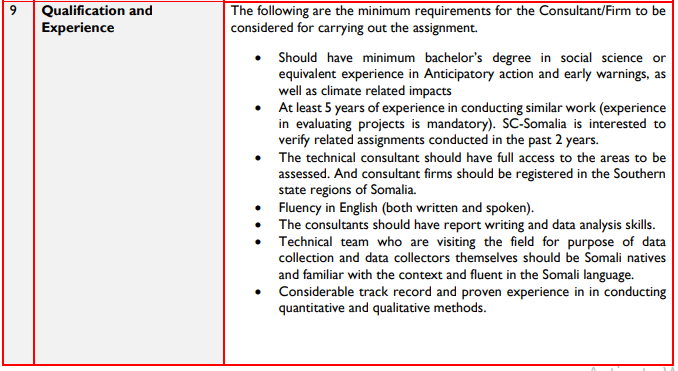
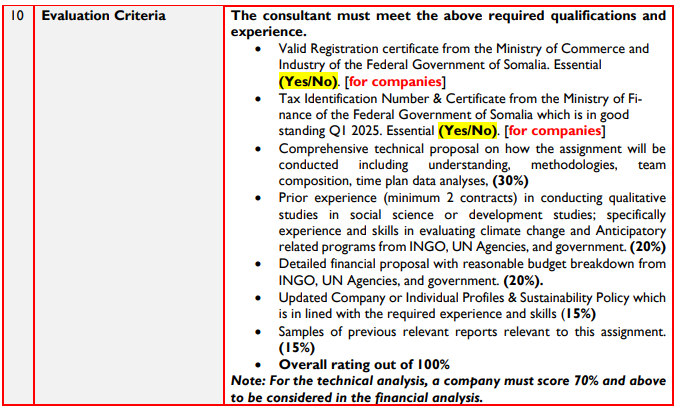
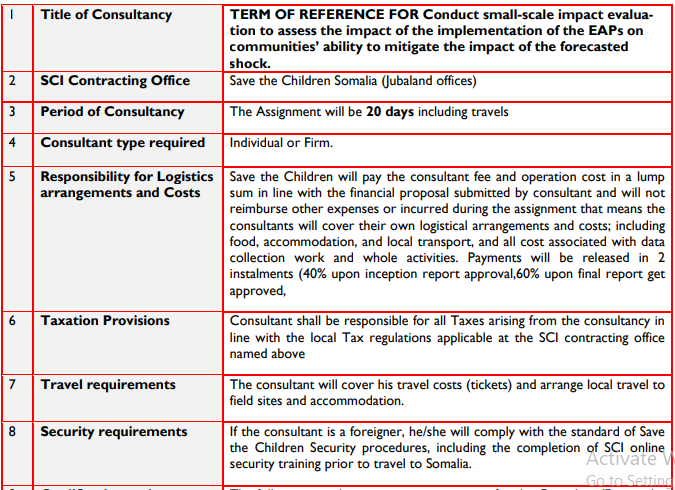
Applications can be submitted by either:
Electronic Submission via ProSave (Recommended)
• Submit your response in accordance with the guidance provided in the below document:
• Bidders are encouraged to apply via Ariba system. Please request the Ariba link via email sending your company profile and Business registration certificate/CV. Please address your Ariba link request to css.logistics@savethechildren.org
Electronic Submission via Protected Email box (Optional)
• Email should be addressed to southcentral.supplychain@savethechildren.org
• Note – this is a sealed tender box which will not be opened until the tender has closed. Therefore, do not send tender related questions to this email address as they will not be answered.
• The subject of the email should be: “Endline Evaluation-Conduct small-scale impact evaluation to assess the impact of the implementation of the EAPs”
• All attached documents should be clearly labelled so it is clear to understand what each file relates to.
• Emails should not exceed 15 MB – if the file sizes are large, please split the submission into two emails.
• Do not copy other SCI email addresses into the email when you submit it as this will invalidate your bid.
Your bid must be received, no later than 15th February 2025
Bids must remain valid and open for consideration for a period of no less than 60 days

WE BELIEVE EVERY CHILD DESERVES A FUTURE. Around the world, too many children start life at a disadvantage simply because of who they are and where they come from. Millions of children are dying from preventable causes, face poverty, violence, di... Read More
